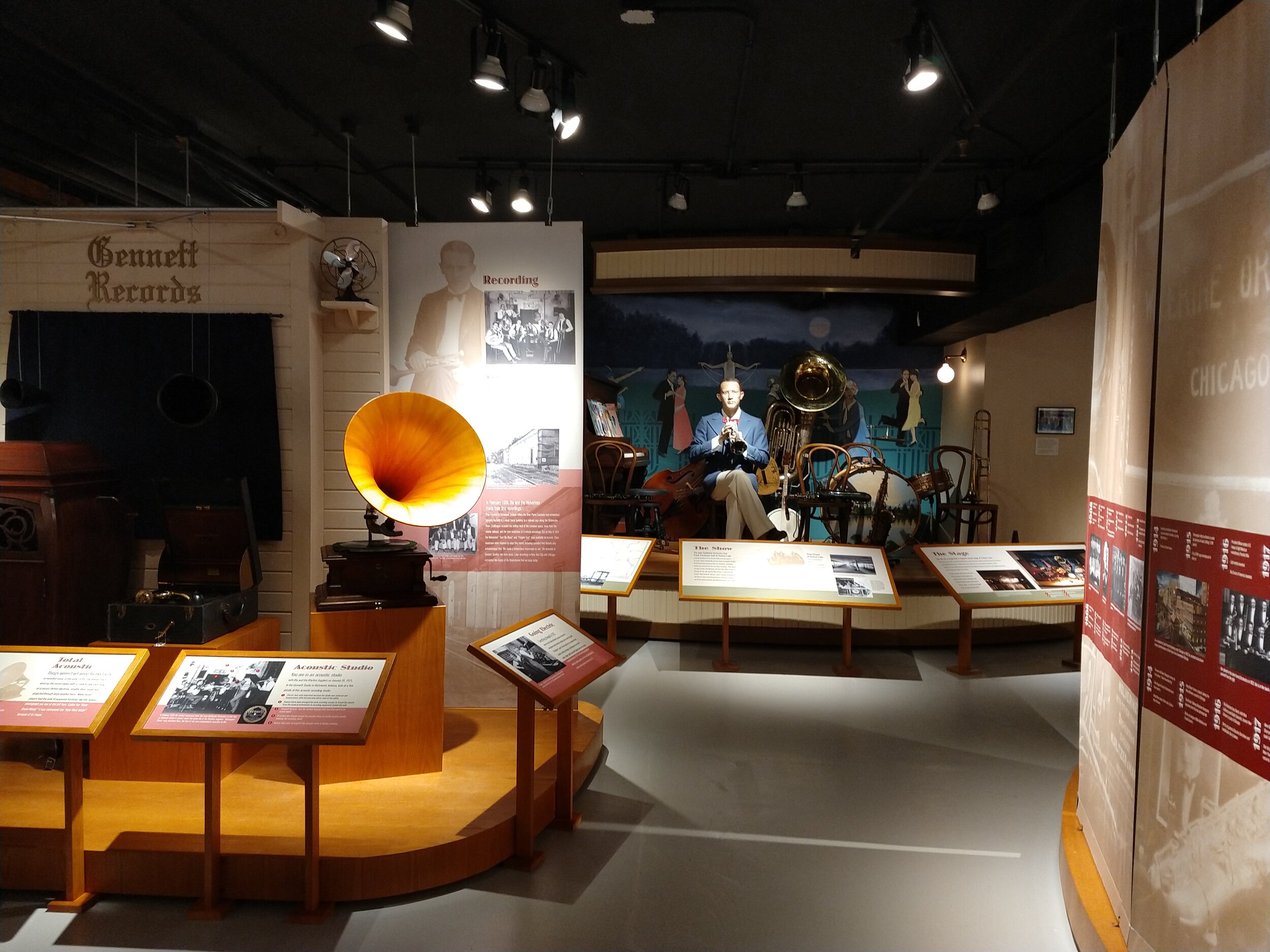
Hudson Lake stage

Artifacts from the apartment where Bix died.
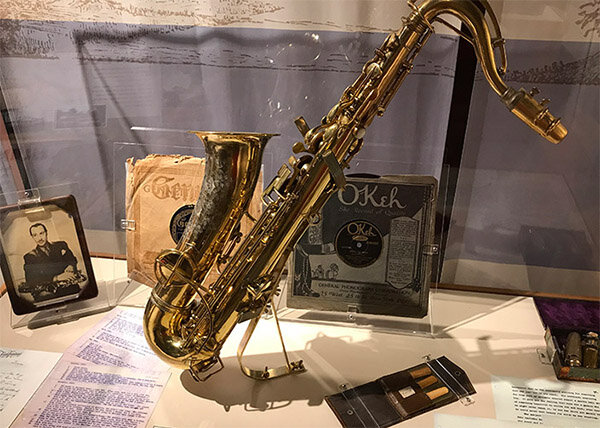
Tram's sax
Displays appeal to adults and school-age children, as well as serious scholars and enthusiasts. They were designed by a consortium of leading Bix experts and Joseph Hines of Project Arts & Ideas, Dearborn, MI.
The full story of Bix's brief but eventful life is presented in 10 sections:
Bix Lives, showing how his legend has grown over the nine decades since his death, and how his legacy continues to inspire musicians and music lovers around the world.
Home and Family: Bix’s upbringing in a loving family steeped in music.
Davenport, the many musical influences available to Bix in his hometown, from riverboats to local dancehalls and vaudeville theaters.
Lake Forest and Chicago: Bix’s last year of high school was spent in Chicago’s northern suburb of Lake Forest, where the lure of jazz in the Windy City proved irresistible to the young musician.
Wolverines and Gennett Records: Bix takes on life as a professional musician with a young band that makes a reputation in the Midwest and eventually New York. He makes his first recordings in a pioneering record studio in which Louis Armstrong, Jelly Roll Morton, Muggsy Spanier, and the New Orleans Rhythm Kings also made their recording debuts.
Partnering with Trumbauer: Bix finds a “guardian angel” and a musical soulmate in saxophonist Frank Trumbauer. Bix plays in Tram’s band at the Arcadia Ballroom in St. Louis and follows him into the Jean Goldkette band, and later the Paul Whiteman Orchestra.
Hudson Lake: At the back wall of the Museum, the stage of the Hudson Lake Casino is re-created, with the original steps, along with a lifesize figure of Bix holding a cornet.
Jean Goldkette and his orchestra are shown in newly discovered photographs, along with instruments belonging to band members, including trombonist Spiegle Willcox, who performed into his late 90s at the annual Bix Beiderbecke Memorial Jazz Festival in Davenport.
Paul Whiteman Years: Bix reaches the pinnacle of the music business, but constant work, travel, and addiction to alcohol take a toll on his health.
Decline and Tragic Death at Age 28, showing items from Apartment 1G at 43-30 46th Street in Sunnyside, Queens, New York, where he died on August 6, 1931. Exhibits include his last piano and apartment artifacts. Also displayed is the guestbook from his funeral in Davenport.
The exhibit ends where it began, in the Bix Lives section.
Now On Display, “Bix Lives: The Founding of a Movement”
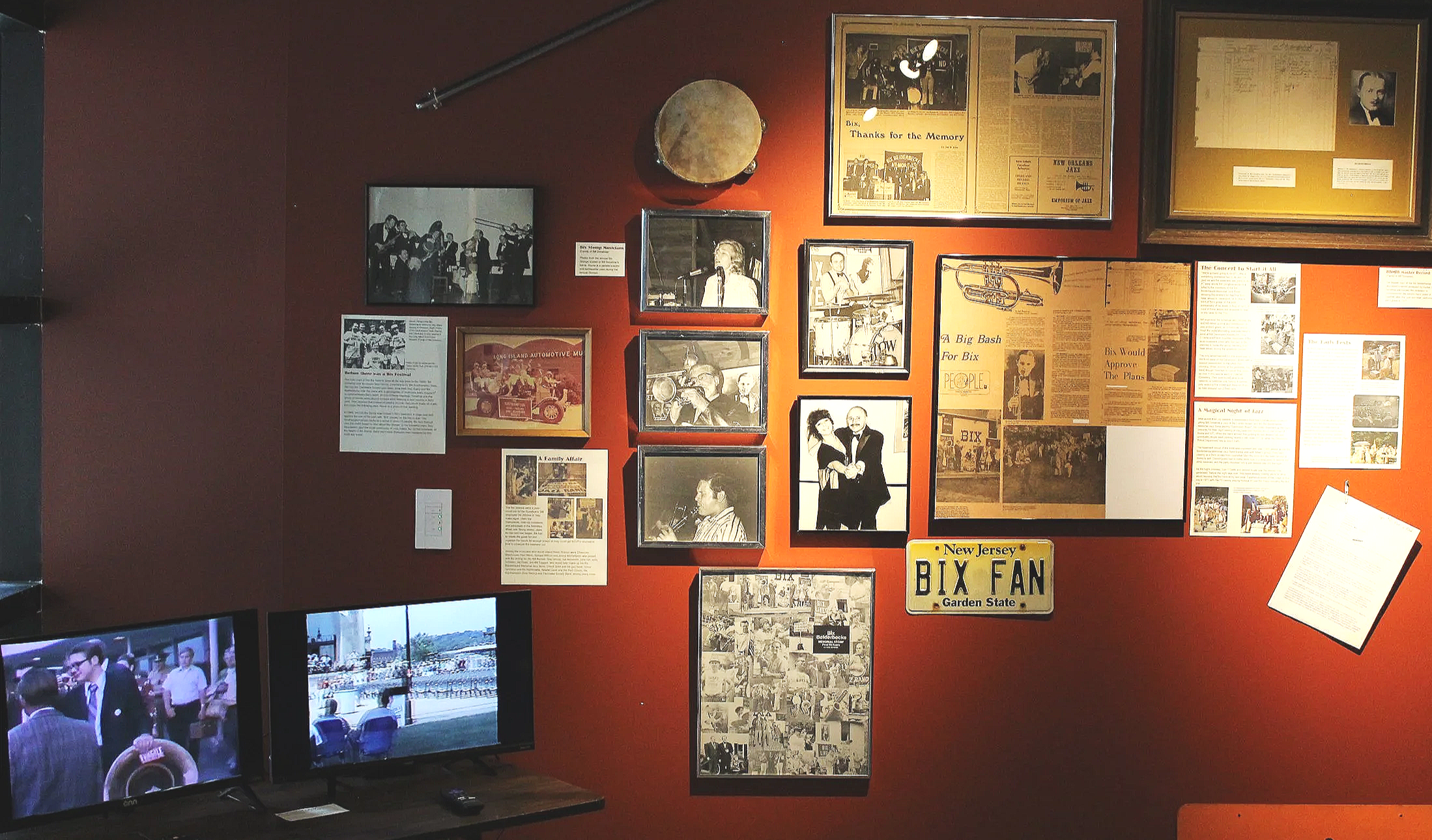
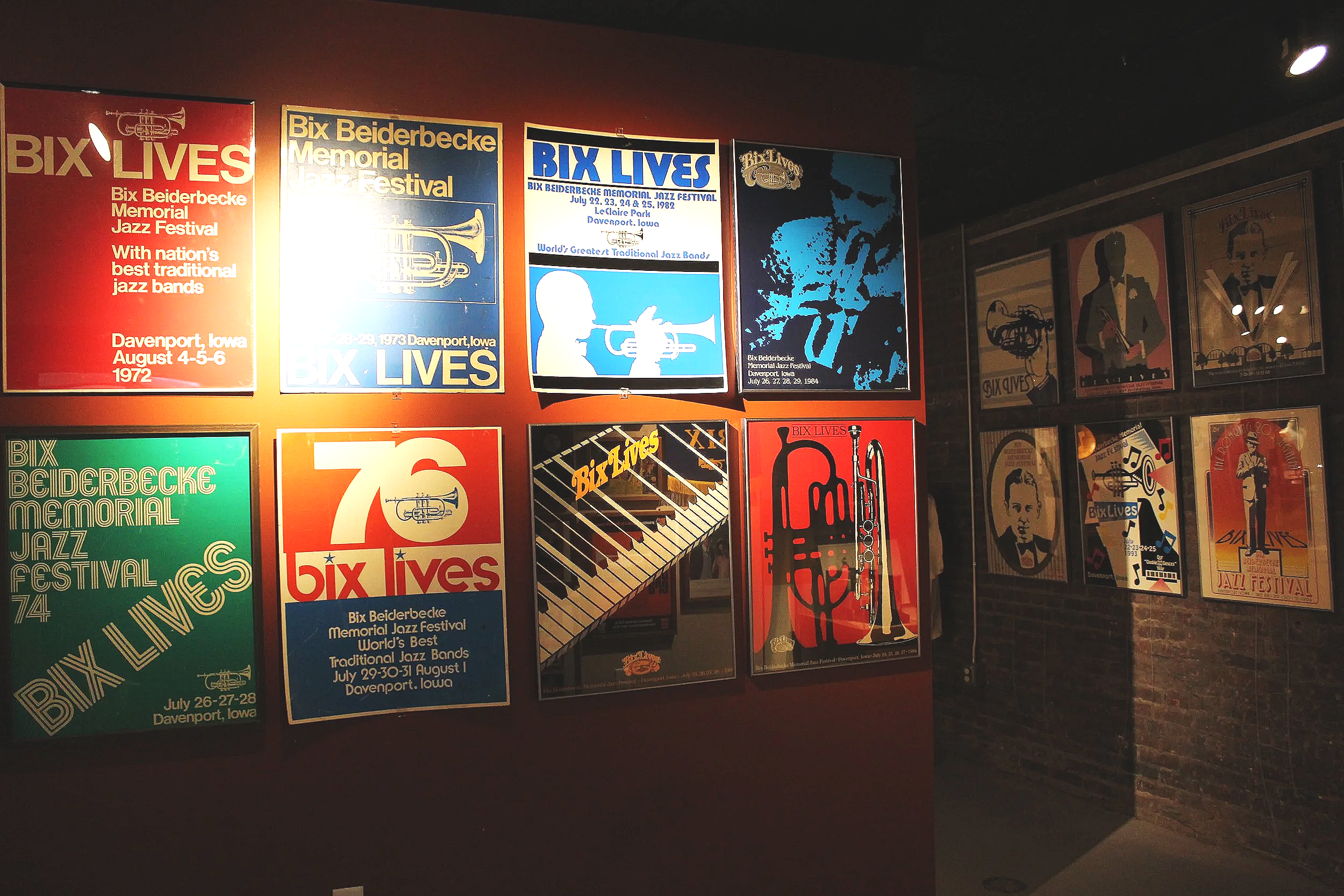
"We're actually going to do it!!! ...this is something someone had to do and I'm glad we are the ones who are going to do it."
Bill Donahoe's words in a letter to the members of the Bix Beiderbecke Memorial Jazz Band detailing their itinerary for their trip from New Jersey to Davenport, IA to play in front of Bix's grave on the 40th anniversary of his death in Aug of 1971. This trip would go on to unintentionally start the Bix Jazz Festival, which celebrates it's 55th year in 2026. Learn how it all began with a special exhibit on the history of this important festival featuring historic photos, video, letters, newspaper articles, and artifacts detailing how one man with a passion for Bix started one of the longest-running jazz festivals still standing today.
Exhibit Highlights:
Rare Bix Festival footage, including footage of the event that kicked it all off on the 40th anniversary of Bix’s death in 1971.
A wall dedicated to the many posters of Bix Festivals past
Photos and letters from the collection of Bill Donahoe detailing the early Bix Stomps, a precursor to the annual Bix Fest.
Rare signed Bix Fest memorabilia from the past.